

Northern bald ibis conservation
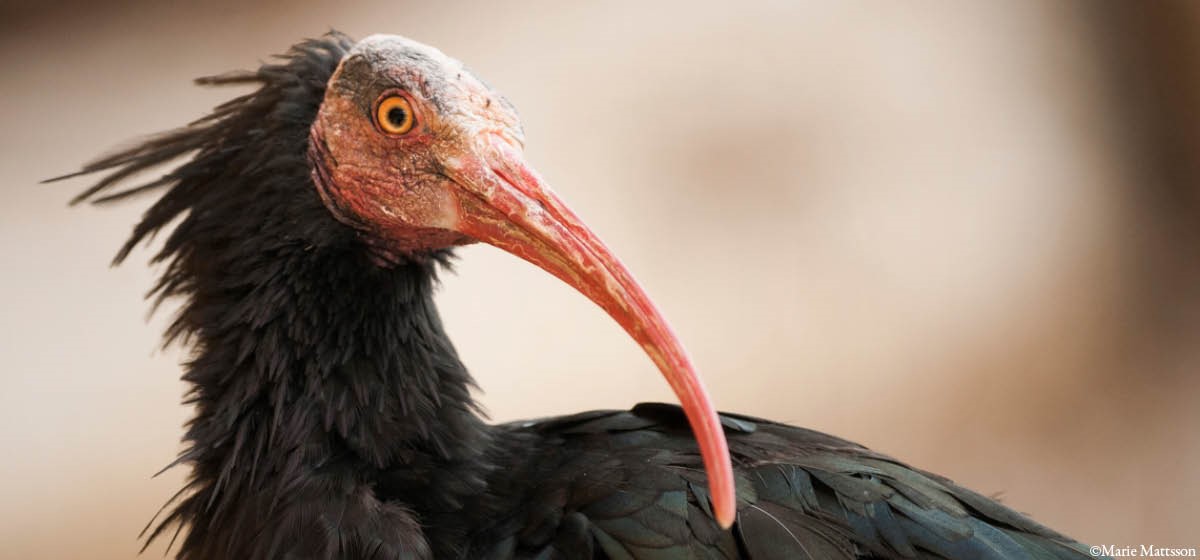
The Northern bald ibis was once spread over large parts of North Africa, the Middle East and even southern Europe. It was already extinct in Europe a few hundred years ago and has since disappeared from one area after another. The threats to the species are mainly loss of habitat and extensive illegal hunting. Today, the only stable population of eremitibis is found in Morocco, but thanks to active conservation efforts, the species has now slowly begun to regain parts of its former range in Europe. In 2018, the hermit ibis was upgraded from critically endangered to "only" critically endangered according to the International Union for Conservation of Nature (IUCN).
What we do at Nordens Ark
One of the projects fighting to save the Northern bald ibis is Proyecto Eremita. The project works to bring the species back to Spain through breeding and release. Nordens Ark supports the project by sending Northern bald ibises born in the park for release. In 2021, Nordens Ark sent its first 10 young ibises to Proyecto Eremita in Andalucía, Spain. The ibises were released into the wild and directly joined a group of wild ibises in the area. All went well and in the following year, a total of 27 pairs bred in the area, compared to just one pair in 2008–2010. Also the number of fledglings reached the highest numbers so far since 2008 - fantastic news!
News from the project – January 2026
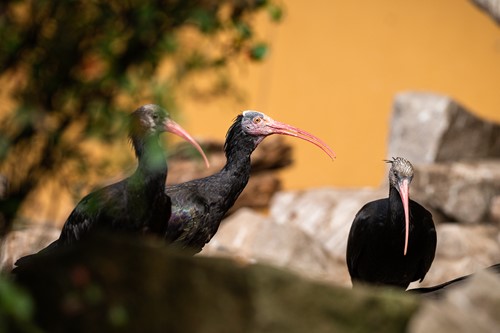
The resident population of northern bald ibis in Cádiz Province continues to grow. The number of breeding pairs reached a new record this year with 47 pairs, and the number of chicks hatched also reached a record level, with a total of 56 chicks in the population. The population is now estimated to consist of approximately 300 individuals.
As a result of these significant successes in the reintroduction of northern bald ibis over the years, the project will now enter a pause to allow the birds to establish more fully. The focus will instead shift to monitoring the development of the population.
In collaboration with