



Carpatian lynx conservation work
The Carpathian lynx (Lynx lynx carpathicus) is one of three subspecies of the Eurasian lynx found in Europe. It mainly inhabits forests and mountainous regions in Central and Eastern Europe, including the Carpathian Mountains, the Alps and the Dinaric Alps. The lynx is one of Europe's largest predators and is recognised by its spotted coat, short black-tipped tail and distinctive ear tufts.
Although the Eurasian lynx is not threatened across its entire range, many populations in Europe are small, isolated and genetically vulnerable. During the 19th century, the species disappeared from large parts of Central Europe due to hunting and habitat loss. Thanks to extensive conservation efforts and reintroduction programmes, the lynx has returned to several areas where it had previously become extinct.
However, many of the reintroduced populations remain small and isolated. Fragmented habitats, roads and other infrastructure make it difficult for lynx to move between areas, limiting the exchange of genetic material. Over time, low genetic diversity can lead to inbreeding and reduce the long-term survival of these populations.
To conserve the Carpathian lynx, the Linking Lynx network works to monitor, manage and reintroduce the subspecies across parts of its natural range. The long-term goal is to reconnect existing populations and create a viable metapopulation throughout Central and Eastern Europe.
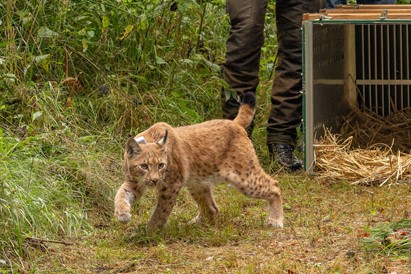
A Carpathian lynx being released into the wild. Photo: Linking Lynx.
What we do at Nordens Ark
Nordens Ark is a partner in the international conservation initiative Linking Lynx, working to strengthen and re-establish viable populations of the Carpathian lynx in Central Europe.
The Carpathian lynx at Nordens Ark are part of the European Endangered Species Programme (EEP), coordinated by EAZA. The breeding programme supports Linking Lynx by providing genetically important zoo-born animals for reintroduction projects in Central Europe.
To be considered for release, lynx must be raised in large, natural enclosures with very limited contact with people. Only facilities that meet strict requirements are approved for this work. Nordens Ark meets these criteria, and our long-term goal is for lynx born here to contribute to strengthening and restoring wild populations of the Carpathian lynx.
Through our collaboration with Linking Lynx, Nordens Ark helps strengthen small and isolated lynx populations, increase the exchange of genetic material between them and secure a future for the Carpathian lynx in Europe.